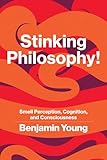
Stinking philosophy! : smell perception, cognition, and consciousness / Benjamin D. Young.
By: Young, Benjamin D [author.]
Language: English Publisher: Cambridge, Massachusetts : The MIT Press, [2024]Description: xiv, 233 pages ; 23 cmContent type: text Media type: unmediated Carrier type: volumeISBN: 9780262548885; 0262548887Subject(s): Smell -- PhilosophyGenre/Form: Electronic books.DDC classification: 128/.2 LOC classification: BD214 | .Y68 2024Online resources: Full text is available at the Directory of Open Access Books. Click here to view.| Item type | Current location | Home library | Call number | Status | Date due | Barcode | Item holds |
|---|---|---|---|---|---|---|---|
 EBOOK/OPEN ACCESS
|
COLLEGE LIBRARY | COLLEGE LIBRARY | 128/.2 Y843 2024 (Browse shelf) | Not for loan (In Process) |
Includes bibliographical references and index.
An apologetic preface -- What are smells? -- Tasting flavors -- Formatting odors -- Pondering smells -- Unconsciously smelling -- Stinking theories of consciousness.
"An original work of scholarship that argues for the importance of olfaction (sense of smell) for understanding perennial issues philosophy of mind, perception, and consciousness"-- Provided by publisher.
"The nature of olfaction; its importance for understanding perennial issues of philosophy of mind, perception, and consciousness; and its implications for cognitive neuroscience. What are smells? Despite the best efforts of philosophy and the chemosciences, the question remains vexing--but no more perplexing than the historical lapse of the past few centuries to seriously consider a sense that has a key place in philosophy of mind and perception. Stinking Philosophy! is Benjamin Young's answer to this critical lapse. Drawing together more than a decade of research on olfactory philosophy, this book offers a clear, comprehensive look at the nature of odors--how we perceive smells, how we cognitively represent odors, how we communicate about them as categories, and what they can tell us about consciousness. In Stinking Philosophy! Young presents a methodology for addressing the philosophical and conceptual issues raised by the sense of smell. Then he explores how the philosophy of smell contributes to--and advances--a wide range of debates within philosophy of mind, perception, and cognitive neuroscience. Ultimately, his work demonstrates how empirically informed philosophy can have a significant impact on interdisciplinary research on smell across philosophy, the chemosciences, and neuroscience." -- Adapted from publisher's description.
Creative commons Attribution-NonCommercial-NoDerivatives 4.0 International CC BY-NC-ND 4.0
There are no comments for this item.