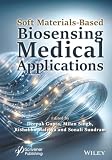
Soft Materials-Based Biosensing Medical Applications.
Contributor(s): Gupta, Deepak | Singh, Milan | Malviya, Rishabha | Sundram, Sonali
Language: English Publisher: Newark : Beverly, MA : Wiley ; Scrivener Publishing, 2025Copyright date: ©2025Description: 1 online resource (522 pages)Content type: text Media type: computer Carrier type: online resourceISBN: 9781394213559; 9781394214143; 1394214146; 1394214731; 9781394214747; 139421474X; 9781394214730Subject(s): Biomedical engineering | Biosensors | Biosensing Techniques | Génie biomédical | Biocapteurs | biomedical engineering | Materials Science | TECHNOLOGY & ENGINEERINGGenre/Form: Electronic books.Additional physical formats: Print version:: No title; Print version:: No titleDDC classification: 610.28 LOC classification: R856Online resources: Full text is available at Wiley Online Library. Click here to view. Summary: The book offers a comprehensive, interdisciplinary overview of how innovative soft materials are revolutionizing biosensing technologies, making it an essential read for anyone interested in cutting-edge advancements in biomedical research and healthcare. Soft materials include granular materials, foams, gels, polymers, surfactants, functional organics, and biological molecules. These structures can be altered by thermal or mechanical stress due to their ability to self-organize into mesoscopic physical structures. They are becoming increasingly significant as functional materials for broader applications because of their rich surface chemistry and versatile functions. A biosensor is an analytical tool for chemical compound detection that combines a biological element with a physicochemical detector. Sensitive biological components, such as proteins, carbohydrates, tissue, bacteria, and enzymes, are collected from a biomimetic element that interacts and binds with the analyte under investigation. In biosensors, soft matter may function as both a sensing and transducing component. The interplay of soft matter with biomolecular analytes results in cell signaling pathways, diagnostic tests for applications in low-resource environments, prospective drug development, molecular biodetection, chemical sensors, and biological sensors. Understanding these biomolecular interactions in the context of acute illnesses is critical for biomedical research and healthcare. This has fueled efforts to create a biosensor that is effective, low-cost, and label-free. Several approaches using soft materials to functionalize and tailor structures have greatly advanced science, including chemistry, physics, pharmaceutical science, materials science, and engineering. Soft Materials-Based Biosensing Medical Applications summarizes recent advances in soft materials with unique physicochemical properties that synergistically promote biosensing systems. Audience The book will be read by researchers, materials scientists, electronic and AI engineers, as well as pharmaceutical and biomedical professionals interested in the uses of biosensing.| Item type | Current location | Home library | Call number | Status | Date due | Barcode | Item holds |
|---|---|---|---|---|---|---|---|
 EBOOK
EBOOK
|
COLLEGE LIBRARY | COLLEGE LIBRARY | 610.28 So234 2025 (Browse shelf) | Available (In Process) |
The book offers a comprehensive, interdisciplinary overview of how innovative soft materials are revolutionizing biosensing technologies, making it an essential read for anyone interested in cutting-edge advancements in biomedical research and healthcare. Soft materials include granular materials, foams, gels, polymers, surfactants, functional organics, and biological molecules. These structures can be altered by thermal or mechanical stress due to their ability to self-organize into mesoscopic physical structures. They are becoming increasingly significant as functional materials for broader applications because of their rich surface chemistry and versatile functions. A biosensor is an analytical tool for chemical compound detection that combines a biological element with a physicochemical detector. Sensitive biological components, such as proteins, carbohydrates, tissue, bacteria, and enzymes, are collected from a biomimetic element that interacts and binds with the analyte under investigation. In biosensors, soft matter may function as both a sensing and transducing component. The interplay of soft matter with biomolecular analytes results in cell signaling pathways, diagnostic tests for applications in low-resource environments, prospective drug development, molecular biodetection, chemical sensors, and biological sensors. Understanding these biomolecular interactions in the context of acute illnesses is critical for biomedical research and healthcare. This has fueled efforts to create a biosensor that is effective, low-cost, and label-free. Several approaches using soft materials to functionalize and tailor structures have greatly advanced science, including chemistry, physics, pharmaceutical science, materials science, and engineering. Soft Materials-Based Biosensing Medical Applications summarizes recent advances in soft materials with unique physicochemical properties that synergistically promote biosensing systems. Audience The book will be read by researchers, materials scientists, electronic and AI engineers, as well as pharmaceutical and biomedical professionals interested in the uses of biosensing.
Description based on publisher supplied metadata and other sources.
There are no comments for this item.