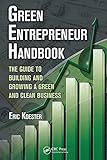
Green Entrepreneur Handbook : the guide to building and growing a green and clean business.
By: Koester, Eric
Language: English Series: What every engineer should know: v. 46.Publisher: [New York] : CRC Press, 2017Description: 1 online resourceContent type: text Media type: computer Carrier type: online resourceISBN: 9780429130014; 0429130015; 661300457X; 1439817316; 9781439817315; 1000218821; 9781000218824Subject(s): New business enterprises -- Environmental aspects | Entrepreneurship | Environmental engineering -- Management | EntrepreneurshipGenre/Form: Electronic books.LOC classification: HD62.5 | .K64 2017ebOnline resources: Full text is available at the Directory of Open Access Books. Click here to view. Summary: Annotation Written by a practicing business attorney with startup experience in the environmental and technology sectors, Green Entrepreneur Handbook: The Guide to Building and Growing a Green and Clean Business assists entrepreneurs in tackling the wide variety of opportunities to go green. It helps you incorporate clean technology, environmental practices, and green business approaches into your work environment. Part IThe first section of the book lays the groundwork for any new entrepreneur to understand the history of the environmental and clean technology movements. The author explains the motivation of greentrepreneurs, the drivers of the green revolution into the future, and how to find the right market for your solution. Part IIThe next section takes a new business from initial idea to sales of the product or service. The book addresses where greentrepreneurs can find ideas around which to build a business; how to form a company to execute the business concept; how to find and retain founders, employees, advisors, and directors; how to raise money and make sales; and the importance of intellectual capital and assets. Part IIIEmphasizing aspects unique to the green business environment, the third part provides a sound understanding of utilities and energy generation and distribution and explores funding through project finance. It also looks at the players and process of selling to the government; the federal, state, and local regulatory impacts; government incentives and tax programs designed to spur clean technology development; and grants, loans, and other funds as sources of capital. Part IVIn the fourth section, the author covers lessons learned and emerging challenges. He offers practical suggestions for going green that businesses can implement themselves and describes current gree.| Item type | Current location | Home library | Call number | Status | Date due | Barcode | Item holds |
|---|---|---|---|---|---|---|---|
 EBOOK/OPEN ACCESS
|
COLLEGE LIBRARY | COLLEGE LIBRARY | Not for loan |
Includes bibliographical references and index.
Annotation Written by a practicing business attorney with startup experience in the environmental and technology sectors, Green Entrepreneur Handbook: The Guide to Building and Growing a Green and Clean Business assists entrepreneurs in tackling the wide variety of opportunities to go green. It helps you incorporate clean technology, environmental practices, and green business approaches into your work environment. Part IThe first section of the book lays the groundwork for any new entrepreneur to understand the history of the environmental and clean technology movements. The author explains the motivation of greentrepreneurs, the drivers of the green revolution into the future, and how to find the right market for your solution. Part IIThe next section takes a new business from initial idea to sales of the product or service. The book addresses where greentrepreneurs can find ideas around which to build a business; how to form a company to execute the business concept; how to find and retain founders, employees, advisors, and directors; how to raise money and make sales; and the importance of intellectual capital and assets. Part IIIEmphasizing aspects unique to the green business environment, the third part provides a sound understanding of utilities and energy generation and distribution and explores funding through project finance. It also looks at the players and process of selling to the government; the federal, state, and local regulatory impacts; government incentives and tax programs designed to spur clean technology development; and grants, loans, and other funds as sources of capital. Part IVIn the fourth section, the author covers lessons learned and emerging challenges. He offers practical suggestions for going green that businesses can implement themselves and describes current gree.
Creative Commons Attribution-NonCommercial-NoDerivatives 4.0 International CC BY-NC-ND 4.0
https://creativecommons.org/licenses/by-nc-nd/4.0/
English.
There are no comments for this item.