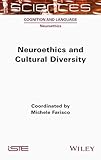
Neuroethics and cultural diversity / coordinated by Michele Farisco.
Contributor(s): Farisco, Michele [editor.]
Language: English Series: Cognition and language. Neuroethics: Publisher: London, UK : Hoboken, NJ : ISTE, Ltd. ; Wiley, 2023Description: 1 online resource (352 pages)Content type: text Media type: computer Carrier type: online resourceISBN: 9781789451399; 9781394257522; 139425752XSubject(s): Neurosciences -- Moral and ethical aspectsGenre/Form: Electronic books.DDC classification: 174/.96128233 LOC classification: RC343Online resources: Full text is available at Wiley Online Library Click here to view Summary: There is a growing discussion concerning the relationship between neuroethical reflections and cultural diversity, which is among the most impactful factors in shaping neuroethics, both as a scientific discipline and a social enterprise. The impacts of culture on science and its public perception are particularly relevant to neuroethics, which aims to facilitate the creation of an interface between neuroscience and society at large. Time is ripe for neuroethics to review the influence of the culturally specific contexts from which it originated (i.e. North America and Western Europe) and to also include other cultural perspectives in the discussion. This book illustrates a convergent approach among different cultures in identifying the main issues raised by neuroscience and emerging technologies. This should be taken as a starting point for advancing in the search for shared solutions, which are, if not definitive, at least sufficiently reliable to be translated into democratic deliberative processes.| Item type | Current location | Home library | Call number | Status | Date due | Barcode | Item holds |
|---|---|---|---|---|---|---|---|
 EBOOK
EBOOK
|
COLLEGE LIBRARY | COLLEGE LIBRARY | 174.96128233 N3984 2023 (Browse shelf) | Available |
Includes bibliographical references and index.
There is a growing discussion concerning the relationship between neuroethical reflections and cultural diversity, which is among the most impactful factors in shaping neuroethics, both as a scientific discipline and a social enterprise. The impacts of culture on science and its public perception are particularly relevant to neuroethics, which aims to facilitate the creation of an interface between neuroscience and society at large. Time is ripe for neuroethics to review the influence of the culturally specific contexts from which it originated (i.e. North America and Western Europe) and to also include other cultural perspectives in the discussion. This book illustrates a convergent approach among different cultures in identifying the main issues raised by neuroscience and emerging technologies. This should be taken as a starting point for advancing in the search for shared solutions, which are, if not definitive, at least sufficiently reliable to be translated into democratic deliberative processes.
About the Author
Michele Farisco is a researcher at the Centre for Research Ethics and Bioethics, Uppsala University, Sweden, and at Biogem Institute, Ariano Irpino (AV), Italy. He is the author of four books and has written several articles regarding posthumanism, ethical, legal and social implications (ELSI) of genetics and neuroscience, consciousness, Artificial Intelligence, and neuroethics.
There are no comments for this item.